dilemmas of impact: why every purpose-driven company has to choose its battles
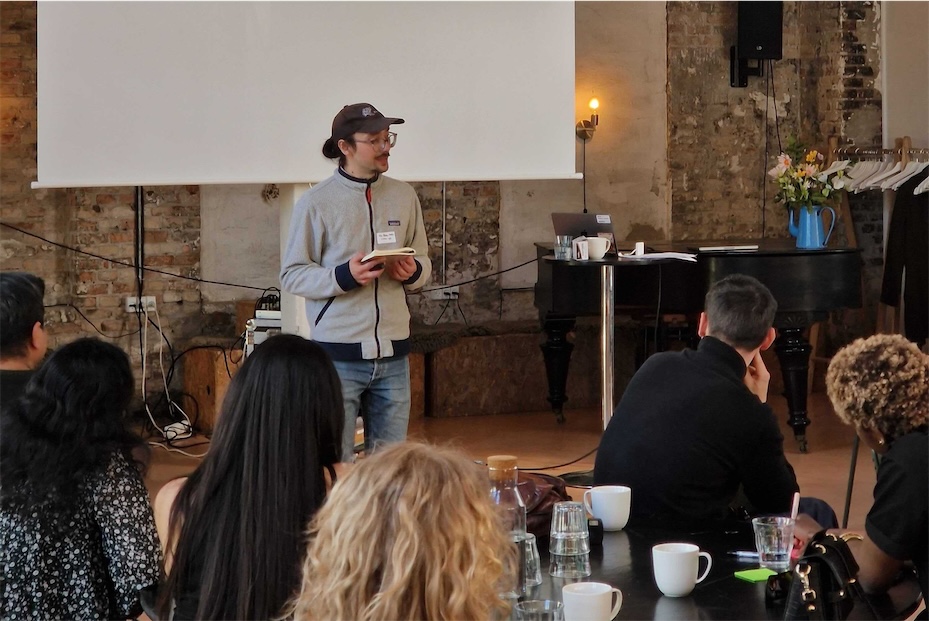
If you run an impact-first company – or you simply treat your job as leverage for impact – I bet that there’s a version of society that you’re deeply, almost unreasonably impatient to bring about. And it’s rarely one thing. It’s ten things, all tangled into each other, and the harder you look at where the boundaries of your organisation or job should sit, the more the boundaries seem to dissolve.
At cirka, we feel this constantly on various levels. For instance, we want to:
- Make every decision in a democratic way, in line with our principles.
- Be accommodating and available whenever someone reaches out and asks for help.
- Only support organisations with genuinely good intentions.
None of that is unreasonable. All of it is, at the same time, impossible to do fully – not because we don’t care enough, but because caring about everything at once is how mission-driven organisations quietly stop functioning.
the reality that doesn’t care about your ambitions
Here’s a small, slightly awkward example, sitting right in front of you: this post was written in collaboration with AI. We know generative AI carries a real environmental cost, and we’d rather not lean on service providers whose business model is fundamentally extractive. If we could change that, we would (sorry to make you write this, Claude).
But reality, as defined by systems well beyond our control, has its own agenda. Barriers related to the three dilemmas mentioned could be that:
- Decisions have to move forward.
- Deadlines have to be met.
- Bills have to be paid.
Based on my own experience, I firmly believe that an organisation that refuses every imperfect solution ends up with no organisation left to make any impact.
That’s the point: not letting perfection stand in the way of progress. Good enough is good enough – as long as you’re honest with yourself about how far the grey area stretches and ideally where you draw the line, before you cross it.
how we compromise creatively
Once you accept that you can’t pick every battle fully, the real work becomes deciding which compromises actually protect what matters, instead of quietly eroding it. Here are ours responding to the mentioned dilemmas:
- “Everyone is heard in every decision” becomes “consent, not always consensus”. Democratic ambition doesn’t mean every decision needs a vote. Sometimes it means moving fast, then explaining clearly why – rather than slowing everything down to a pace no functioning organisation could survive.
- “Be available for every request” becomes “point people in the right direction”. When someone reaches out with a question that has already been addressed elsewhere – in a report, in a previous conversation, or by someone else – we try to point them there. It is saying yes in a way we can actually sustain.
- “Pure good intentions” becomes “more good than bad”. We can’t only work with organisations that are already angelic. We work with organisations that genuinely want to do more good than harm – and treat the gap between where they are and where they want to go as part of the work, not a disqualifier.
None of these compromises reflect the society that we would like to bring about. They’re the necessary evil that let us keep operating long enough to make the changes that we deeply care about.
the uncompromisable battles
And then there’s another list – the one we hold onto even when it puts us at a disadvantage on the premises of the ordinary, competitive market:
- We take responsibility for the environmental impact of our decisions, also when it means taking the slower or less convenient mode of transport.
- We’re honest and transparent with each other and others – and with ourselves, which is usually the harder audience.
- We never help organisations with extractive intentions. Full stop.
This is where our pride resides. Not in the long list of good intentions – anyone can hold those – but in the short list that we are holding onto under pressure, on those days it would have been easier to let go. We get challenged on these constantly. And we are proud that we do our very best not to compromise.
It isn’t about having a moral high ground – this is a discipline. The difference matters, because a stance is something you defend in conversation, and a discipline is something you practise, even in decisions that nobody watches. Leading by doing.

if you’re the one setting the stage for this conversation
If you run any programme built to support impact-driven start-ups or companies, this is surely a dilemma that your founders are already wrestling with – whether openly or not. And if you’re hosting a room – a cohort of leaders, an offsite, or a conference stage – built to inspire people to lead with purpose, this is usually the conversation that underpins the one people expect to have. Not “should we care about impact,” but rather “what do we let go of, so the things we actually care about can thrive and make impact”.
Naming that trade-off explicitly, in front of a room, tends to do more for a group of founders or leaders than another round of inspirational framing about changing the world. It gives people permission to stop trying to fight every battle equally – and to get serious about the few they won’t compromise on.
reflections on FAQ
What does it mean to be a purpose-driven or impact-first company? A company that organises its decisions around a social or environmental mission alongside financial sustainability – not instead of it. In practice, that means the mission shapes which trade-offs the organisation is and isn’t willing to make, not just what it says about itself.
What’s the difference between a compromise and giving up on your values? A compromise changes how you pursue a value so the organisation stays functional. Giving up on a value means abandoning it entirely. The distinction is whether a grey zone and a red line exists or not.
How do you decide which battles not to compromise on? Look for the handful of principles where bending even slightly would quietly undo the mission itself, rather than just slow it down. Those become the non-negotiables – and holding them consistently, even at a (seeming) competitive disadvantage, is usually where an organisation’s real impact (and credibility) come from.
Why can’t a purpose-driven company just do everything right? Because every organisation operates inside real constraints – time, money, competition, capacity – and treating every value as equally non-negotiable usually means none of them get protected well. Choosing which battles to fight fully, and which to compromise on, is what makes a mission survivable long-term rather than just admirable in theory.
If this dilemma is one your founders, team, or audience – or yourself – are wrestling with, I would be honored to speak on using business as a vehicle for systemic change, and on the trade-offs and benefits of building a purpose-driven company. Read more about our public speaking and lecturing services or get in touch to talk about your event or business!
This article was written in collaboration with AI.
